
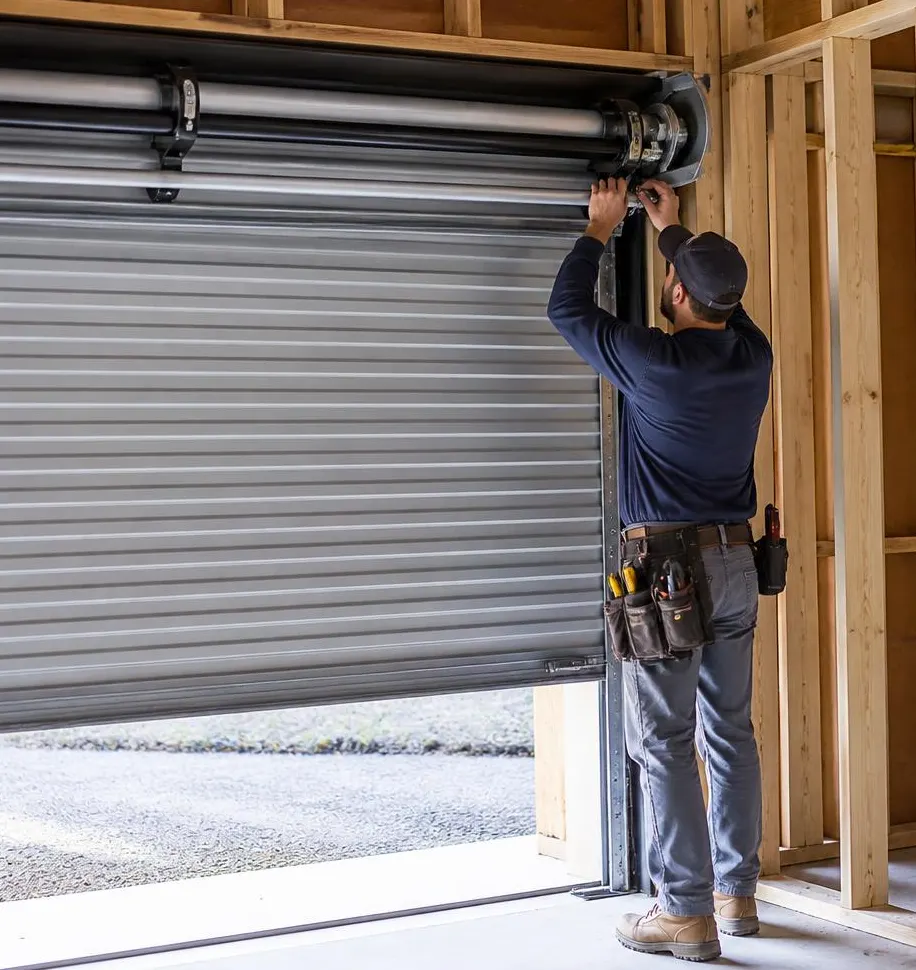
What a Technician Sees After a Wind Event
After a storm rolls through Wakulla County, the calls follow a pattern. A homeowner opens the garage to find the door bowed inward like a sail, the rollers popped clean out of the track, or the whole track pulled away from the frame where the lag screws used to be. Sometimes the door itself looks fine from the street, but the opener's drive gear is stripped because the door flexed hard enough to bind mid-cycle during the worst gusts. None of these are freak accidents. They're what happens when a door built for everyday use gets hit with sustained pressure it was never braced to handle.
Why the Garage Door Is the Weakest Wall in the House
Every other wall in a typical home is a solid, fastened structure. The garage door is a large moving panel held in place by tracks, rollers, hinges, and a spring system doing all the work that studs and drywall do everywhere else. When wind hits a closed house, pressure builds on the windward side and drops on the leeward side. A garage door that isn't reinforced can buckle inward from that pressure difference, and once it fails, wind gets inside the structure and pushes up on the roof from underneath. That's why building codes in wind-prone parts of Florida treat garage doors as a structural component, not just an appliance. If your door was installed years ago, before wind-load standards tightened up along the coast, it may not meet what's expected of a door today.
Signs Your Current Door Won't Hold
- Visible bowing when the door is closed and the wind is up, even on an average windy day.
- Thin, non-reinforced panels with no horizontal struts running across the back of the door.
- Track anchored into cracked, swollen, or rotted wood framing rather than solid backing.
- A standard-duty opener with no reinforcement bracket connecting the door to the track at the top panel.
- Weatherstripping that's cracked, flattened, or missing along the bottom and sides, which lets wind-driven rain push past the seal before the door itself even fails.
Any one of these on its own might hold up fine in a normal afternoon squall. Combined, and under sustained hurricane-season wind, they're the reason a door that seemed sturdy ends up in pieces on the garage floor.
What Wind-Load Rated Doors and Bracing Actually Do
A wind-load rated door is built with heavier gauge steel, reinforced struts running horizontally across the back of each panel, and stronger track and roller hardware designed to transfer pressure into the surrounding frame instead of concentrating it on the door face. Retrofit kits exist for doors that aren't rated, adding horizontal struts and reinforced end hardware to an existing door, which can be a reasonable middle step if full replacement isn't in the budget this season. The trade-off is that retrofitting only helps as much as the door's existing track, hinges, and frame anchoring allow. If those are already worn or the wood framing behind the track has softened from years of humidity, bracing the panel won't fix the weak link behind it.
Moisture, Salt Air, and Why This Matters More Here
Heat and humidity don't just make the garage uncomfortable to work in, they work on the hardware year-round. Steel tracks and springs near the coast pick up salt air and start rusting at the mounting bolts and roller shafts well before they look bad from a distance. Humidity also causes wood jambs to swell and shrink through the wet season, loosening the screws holding the track in place. A track that's even slightly loose has no business trying to resist wind load. Before storm season peaks, it's worth physically grabbing the track with both hands and giving it a shake at several points along its height. Any movement, flex, or grinding sound means the anchoring needs attention now, not after the next named storm is already offshore.
Quick Pre-Storm Checklist
- Check and tighten all track mounting bolts, replacing any that are rusted or stripped.
- Inspect weatherstripping on the bottom seal and side jambs, replacing anything cracked or compressed flat.
- Look for daylight gaps around the door edges when closed, a sign wind-driven rain will find its way in.
- Test the opener's force settings; a door that struggles or reverses on a normal cycle will struggle more under wind pressure.
- Confirm there's a reinforcement brace at the top panel connecting to the track, especially on older doors.
When to Call Crawfordville Door & Opener
If the track shakes when you grab it, the door bows visibly in wind, or you're not sure whether your current setup meets today's wind-load expectations, that's the point to get it looked at before storm season tests it for you. We handle Garage Door Installation & Replacement for homeowners ready to move up to a wind-load rated door, and we do Garage Door Tune-Up & Maintenance visits that cover track anchoring, hardware rust, weatherstripping, and opener force settings in one trip. We'll tell you straight whether reinforcement is enough or whether the door itself is past the point of bracing it.
If you're in Crawfordville, Panacea, Sopchoppy, St. Marks, Wakulla Springs, Medart, Shell Point, or Tallahassee and want your garage door checked before the next storm rolls in, call Crawfordville Door & Opener. We show up on time, tell you what we find, and get it fixed right.